
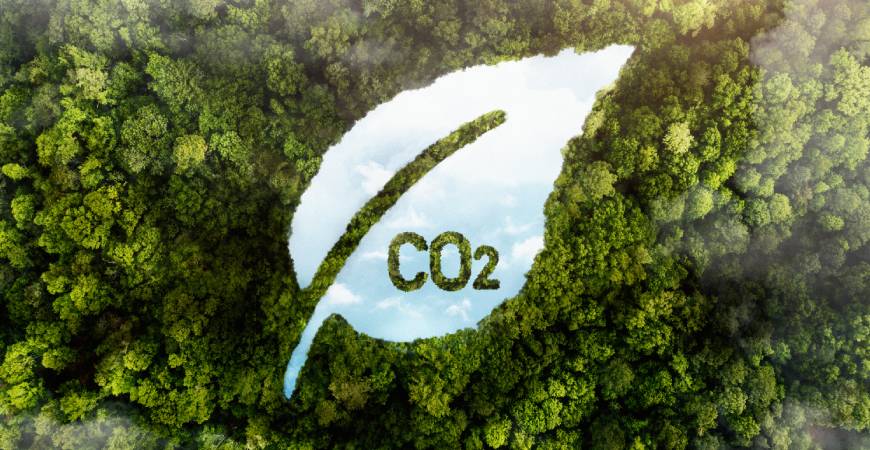
What is Carbon Footprint in the Industrial Packaging Sector?
Category
Publication Date
13 February 2026
Reading Time
8 dakika
The industrial packaging sector sits at the center of a broad operational chain, from production and storage to logistics and reuse. Every link in this chain consumes energy, uses raw materials, and causes direct or indirect greenhouse gas emissions. At this point, the concept of “carbon footprint” is not only an environmental term; it has also become a strategic performance indicator in terms of competitive advantage, cost optimization, and brand reputation.
A carbon footprint refers to the total greenhouse gas emissions generated by a product, service, or company activity. In the context of industrial packaging systems, these emissions arise during raw material sourcing, production processes, transportation, product lifespan, and end-of-life stages. Therefore, the issue is not limited to “recycling” alone; it requires a holistic life cycle approach.
How Does Carbon Footprint Occur In The Industrial Packaging Sector?
The carbon footprint of industrial packaging products generally occurs in four main stages:
1. Raw Material Sourcing: The extraction and processing of materials such as plastic, metal, composite, or wood require high energy consumption. Especially fossil-based raw materials involve carbon-intensive processes.
2. Production Process: Manufacturing operations such as injection molding, thermoforming, cutting, welding, or assembly consume electricity and thermal energy. When energy sources rely heavily on fossil fuels, carbon emissions increase.
3. Logistics And Storage: Heavy, bulky, or non-optimized packaging solutions lead to higher fuel consumption during transportation. This increases logistics-related carbon emissions.
4. End-Of-Life Process: Single-use systems increase waste generation. In cases where recycling infrastructure is insufficient, the carbon impact becomes even greater.
Therefore, reducing carbon footprint does not simply mean saving energy on the production line. It requires an approach that covers the entire value chain, starting from the design phase.
Why Does Carbon Footprint Reduction Provide Competitive Advantage?
In B2B markets, purchasing decisions are no longer based solely on price and technical specifications. Companies operating in global supply chains demand carbon reporting and sustainability commitments from their suppliers. Especially for export-oriented manufacturers, low-carbon packaging solutions can be decisive in tenders and long-term contracts.
Packaging systems with a low carbon footprint:
- Provide advantages in corporate sustainability reports.
- Reduce regulatory risks such as carbon taxes and border carbon adjustments.
- Lower operational costs through energy efficiency.
- Strengthen brand value and corporate reputation.
For this reason, carbon footprint management is not only an environmental responsibility but also a financial and strategic necessity.
How Does Packaging Design Affect Carbon Footprint?
The design phase is the most critical determinant of carbon impact. With the right engineering approach:
- The same durability can be achieved using less material.
- Transport efficiency can be increased with modular systems.
- Logistics volume can be reduced through stackable and foldable structures.
- Product lifespan can be extended with reusable solutions.
For example, an optimized industrial transport crate can be used for dozens of cycles compared to single-use packaging. This dramatically reduces carbon emissions per unit.
How Does Logistics Optimization Reduce Carbon Emissions?
The size, weight, and stackability of packaging directly affect transportation costs and fuel consumption. Lighter and more compact designs enable more products to be transported in a single shipment. This reduces carbon emissions per kilometer.
In addition, reverse logistics systems that collect reusable packaging reduce the need for single-use products. Circular usage models contribute to minimizing carbon footprint in the long term.
How Can Energy Efficiency Be Achieved In The Production Process?
Key methods to reduce carbon emissions in production facilities include:
- Using high-efficiency machinery
- Waste heat recovery systems
- Integration of renewable energy sources
- Digital production monitoring and energy consumption analysis
Monitoring and reporting energy consumption reveal which processes are more carbon-intensive. This makes improvement areas clearly identifiable.
Why Is Life Cycle Analysis Important?
To manage carbon footprint accurately, the Life Cycle Analysis (LCA) approach is critically important. This analysis calculates the total environmental impact of a packaging product from raw material extraction to end-of-life.
Through LCA results:
- The stages with the highest emissions can be identified.
- Material alternatives can be compared.
- Design decisions can be made based on data.
This methodology ensures that the sustainability strategy is based on scientific foundations.
What Does Carbon Footprint Reporting Provide To Companies?
Transparent carbon reporting builds trust among investors, customers, and business partners. Corporate sustainability reports have become standard across many industries. For industrial packaging manufacturers, these reports are not only environmental performance indicators but also business development tools.
Setting measurable targets, preparing annual reduction plans, and regularly monitoring performance should be integrated into long-term growth strategies.
How Will Carbon Management In Industrial Packaging Evolve In The Future?
As global regulations and carbon pricing mechanisms become more widespread, low-carbon production will become the standard. Smart design, digital monitoring systems, and circular economy models will be the key determinants of competition in the sector.
Key trends expected to stand out in the coming period include:
- Carbon-neutral production facilities
- Increasing the proportion of recycled raw materials
- Digital carbon tracking systems
- Circular packaging solutions
Carbon footprint management in the industrial packaging sector is no longer an option; it is a cornerstone of corporate sustainability. Companies that optimize design, production, and logistics processes with a holistic perspective achieve a strong position both environmentally and economically.
Every engineering decision that reduces carbon impact shapes not only today’s standards but also the production standards of future generations. Therefore, developing low-carbon packaging solutions is an integral part of the sector’s long-term vision.




Moving Forward with Confidence in Industry

 Notification Center 00:00