Municipalities and Public Institutions
Application Areas
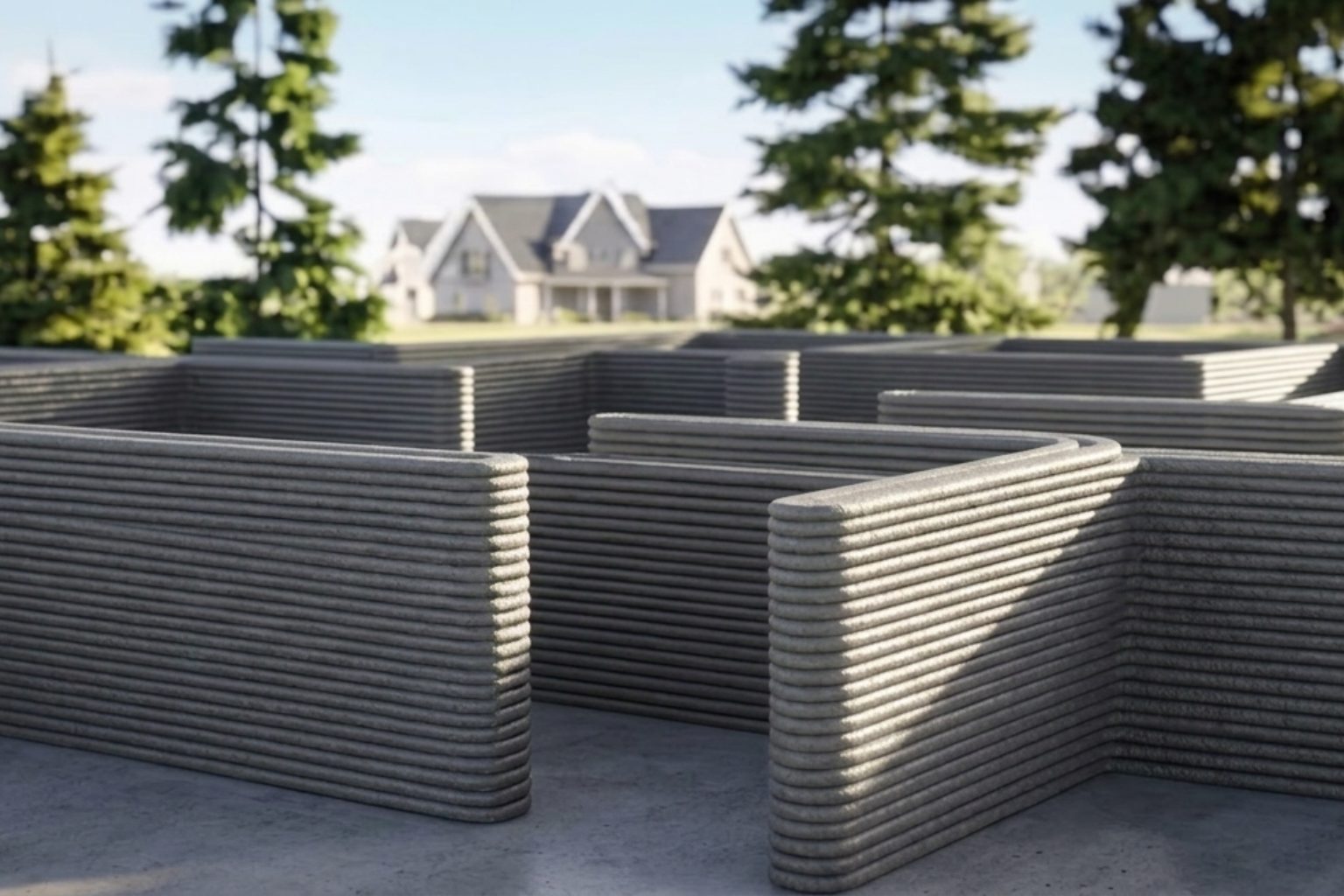
Facade panels and precast elements
Facade elements with different dimensions, forms, and surface textures can be produced directly without the need for molds. Non-repetitive surfaces and complex geometries are incorporated into production without additional labor. This reduces mold production, inventory, and labor costs while increasing product variety.
Decorative concrete products and surface solutions
Custom-patterned cladding panels, decorative wall elements, and architectural surfaces can be produced with high precision. Designs that are costly with traditional methods become fast and economical with 3D concrete printing. This expands your product range and enables value-added manufacturing.
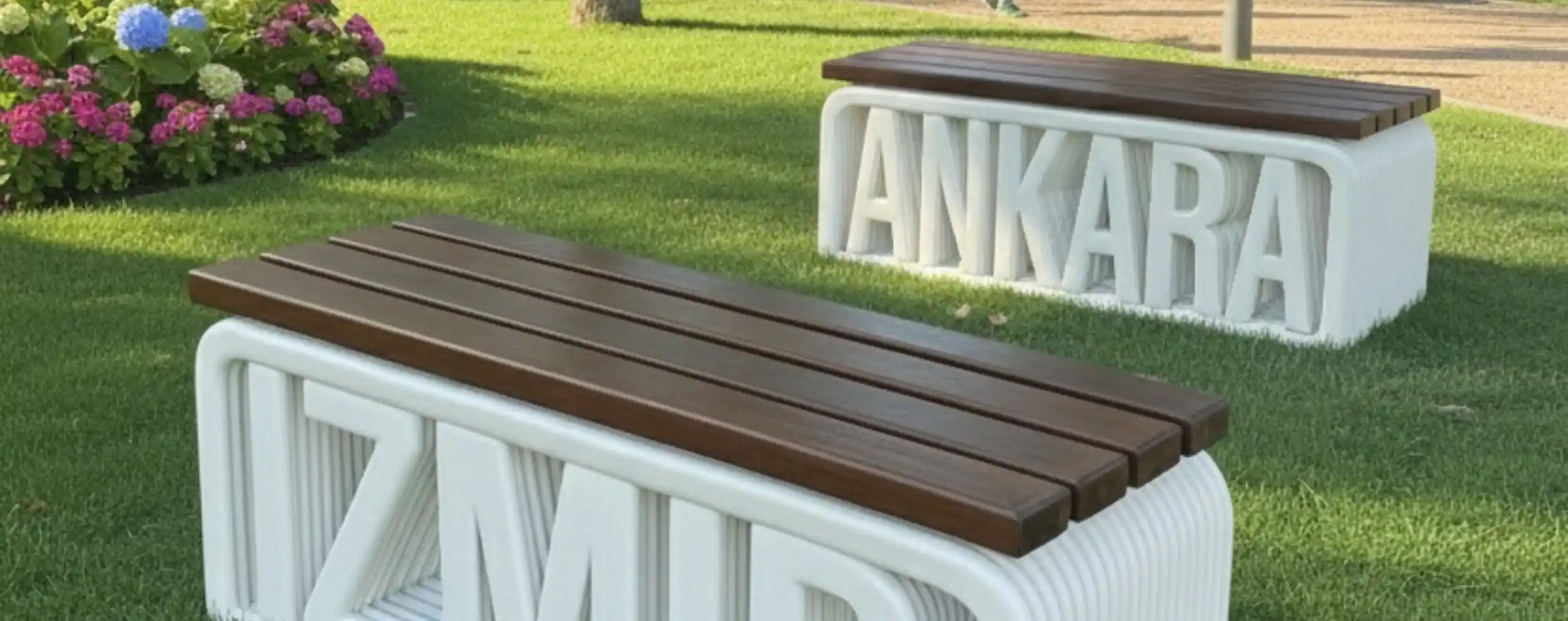
Urban furniture and outdoor elements
Products such as benches, planters, seating groups, and border elements can be produced both as serial and project-specific items. Quickly switch between different products on the same system to gain flexibility in production planning.
Infrastructure and technical concrete elements
Manholes, drainage channels, modular infrastructure parts, and technical components can be produced with less labor, in compliance with standards, and in a repeatable manner. Digital production reduces error rates and ensures quality continuity.
Low-volume and custom productions
Low-volume orders can be produced economically without mold costs. This makes small-scale projects and custom requests profitable, allowing you to reach new customer groups.
Mass production and operational efficiency
You can shorten production time by eliminating mold preparation, waiting, and additional labor processes. Produce more with fewer personnel and gain a competitive advantage by fulfilling orders faster.
Key Advantages
Project costs decrease as mold production, intensive labor, and lengthy manufacturing processes are eliminated. More projects can be realized with the existing budget.
Implementation timelines are shortened thanks to the direct transition from digital design to production. This enables infrastructure, maintenance, and new investment projects to be completed more quickly.
With automation-supported production, more applications can be carried out with fewer personnel. Operational burden decreases while efficiency increases.
On-site production capability minimizes time loss, especially in field applications. It provides a major advantage in projects requiring urgent intervention and fast solutions.
Digital production processes ensure the same quality standard is maintained in every production run. Error rates decrease, and the need for maintenance and renewal is reduced.
Environmental impact is reduced through less material waste and optimized production processes. This contributes to sustainable city goals.
Without being limited to standard products, city-specific designs and applications can be developed. This makes it possible to create unique projects that strengthen urban identity.
Start Production with 3D Concrete Technology — Complete your projects in less time, at lower cost, and with more flexible production models.
Belediyeler ve Kamu Kurumları Ön İçerik
Deliver solutions that add value to your city at a lower cost.
With next-generation 3D concrete printing technology, you can execute your infrastructure and superstructure projects faster, more efficiently, and with greater control. Compared to traditional production processes, you can reduce formwork, labor, and time costs, enabling more effective use of public resources.
Thanks to the direct transition from digital design to production, you can implement your projects in a shorter time and accelerate maintenance, renovation, and new investment processes. This way, you both protect your budget and provide faster, higher-quality, and more sustainable services to citizens.
Our References








Shape the Future of Concrete
Set a new standard on-site with 3D concrete printing systems and integrated production solutions.