3D Concrete Printing Technology: A New Era in the Construction Industry
In recent years, the construction sector has undergone a significant transformation with the development of digital production technologies. One of the most striking examples of this transformation is 3D concrete printing technology.
In traditional construction methods, structural elements are produced using molds, whereas 3D concrete printing technology allows concrete or special mortars to be produced directly from a digital model. This approach makes construction processes faster, more controlled, and more flexible.
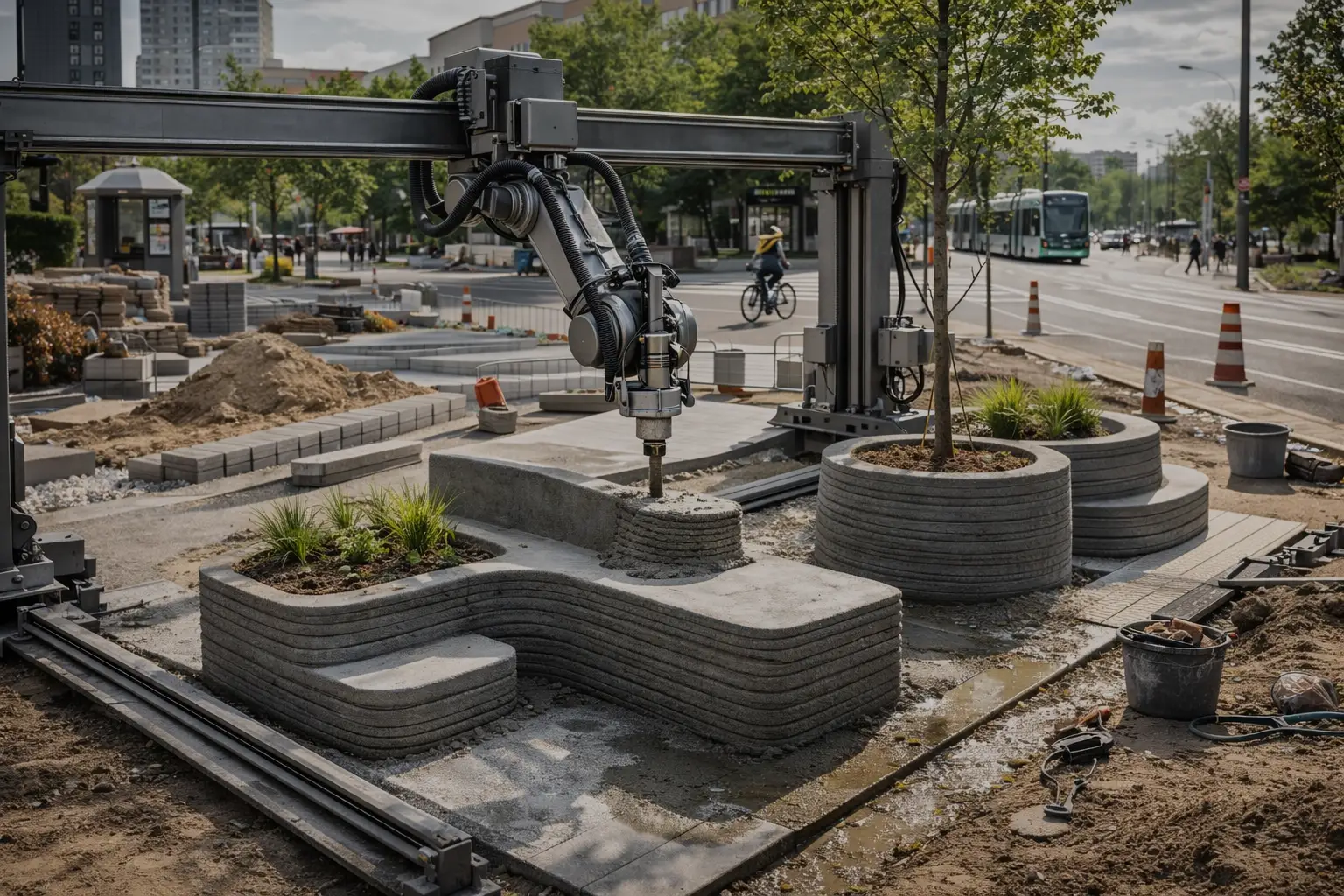
Today, 3D concrete printer systems are used not only in research projects but also in many different areas, from architectural applications to urban furniture, modular structures to infrastructure components.
In this article, we will discuss how 3D concrete printing technology works, the advantages it offers to the construction sector, and the role it will play in the future.
What is 3D Concrete Printing?
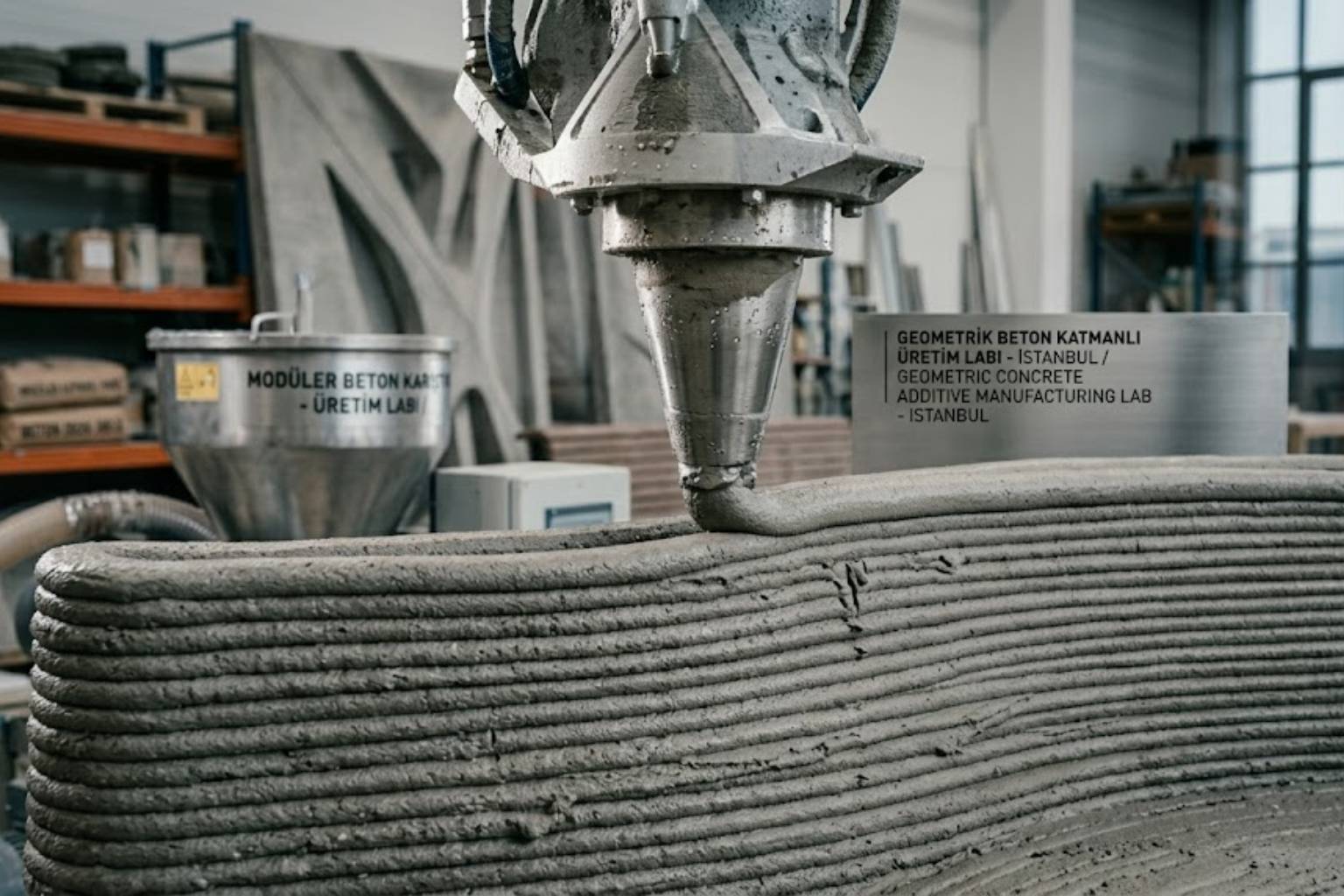
3D concrete printing is based on the principle of producing concrete or specially developed mortars layer by layer using computer-controlled printer systems.
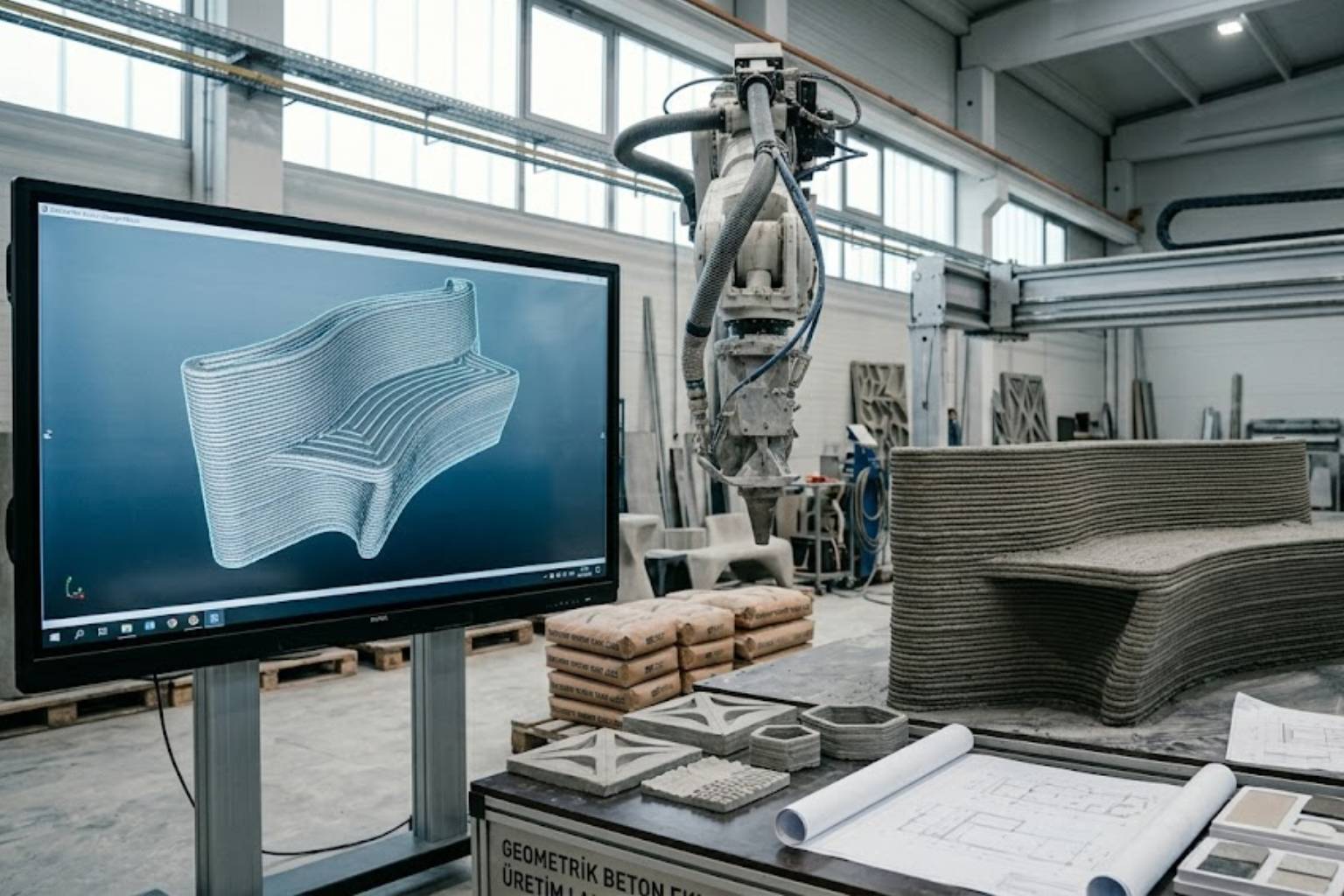
This production method allows designs prepared in digital modeling software to be transferred directly to the production process. Thus, structural elements can be produced without the need for molds.
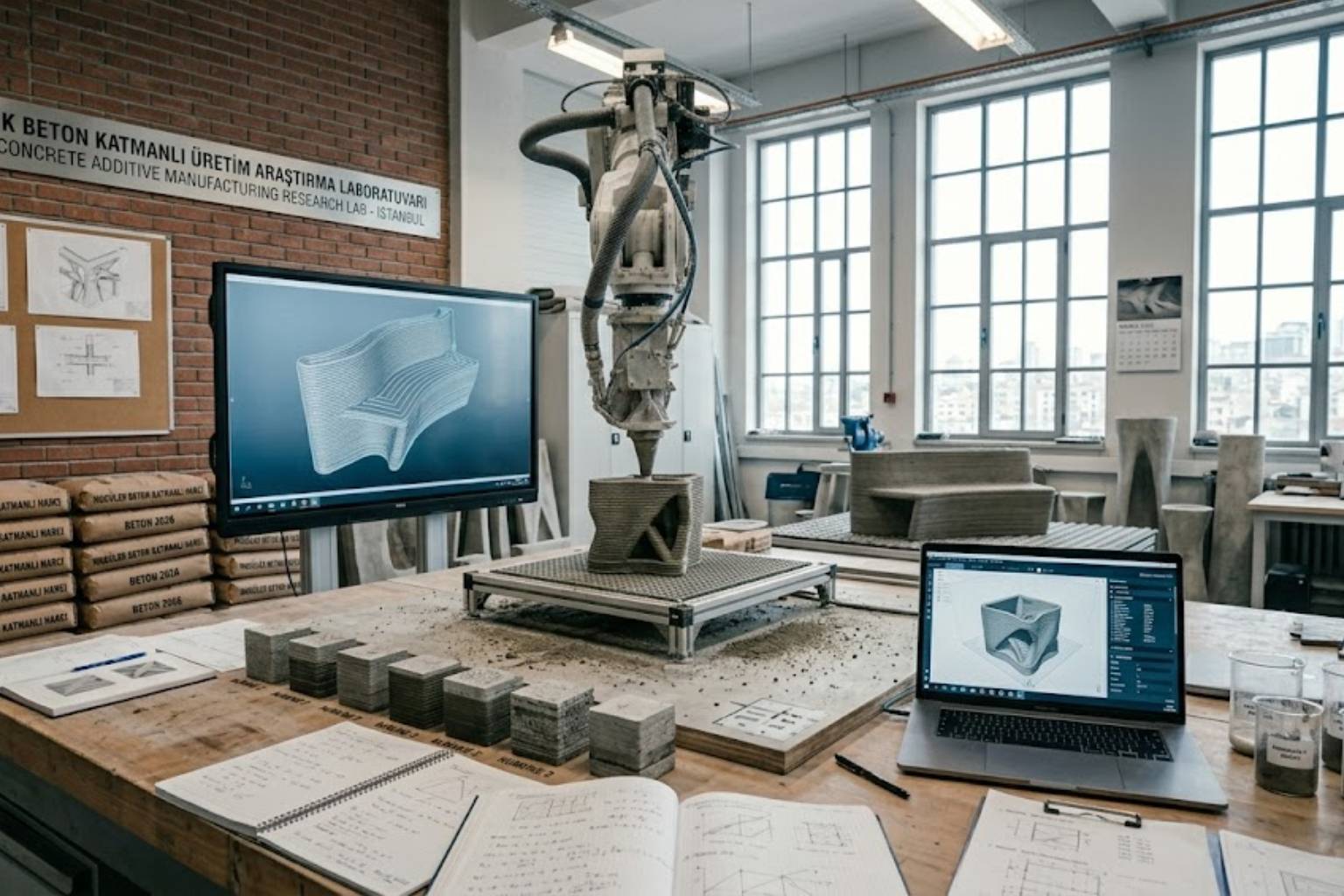
The 3D concrete printing process generally consists of the following stages:
- Preparation of the digital model
- Preparation of concrete or mortar mix suitable for printing
- Adjustment of the printer system’s production parameters
- Production of the material layer by layer
Thanks to this process, structural elements with complex geometries can be produced quickly and precisely.
Advantages of 3D Concrete Printing for the Construction Sector
1. Faster Construction Processes
3D concrete printer systems enable much faster production compared to traditional methods.
Thanks to layer-by-layer production, structural elements can be manufactured directly from the digital model. This eliminates time-consuming processes such as mold preparation and assembly.
Therefore, 3D concrete printing technology:
- shortens project timelines
- simplifies production planning
- offers rapid prototyping opportunities
This speed advantage creates a significant difference in large-scale projects.
2. Cost Advantage
In traditional construction methods, a significant portion of the cost consists of mold production, labor, and long production processes.
3D concrete printing technology can significantly reduce a large part of these costs by digitizing the production process.
With this technology:
- mold costs are eliminated
- labor requirements are reduced
- material usage is optimized
This system provides a serious economic advantage, especially for low-volume productions and custom design projects.
3. Design Flexibility
One of the most important advantages of 3D concrete printing technology is design freedom.
In traditional concrete production, design is often limited by molds. However, with 3D concrete printing technology:
- organic geometries
- parametric designs
- unique surface textures
can be produced easily. This offers new possibilities for architects and designers.
4. Controlled Production Process
3D concrete printing technology enables the digital planning of the production process.
Thus:
- production parameters are kept under control
- error rate is reduced
- production becomes repeatable
This approach provides a significant advantage, especially in applications that require series production.
Projects Completed with 3D Concrete Printing Around the World
3D concrete printing technology is used in many remarkable projects worldwide.
3D Printed Bridge in the Netherlands
The 3D printed bridge produced in the Netherlands demonstrates how far the technology has advanced in terms of durability and design flexibility.
3D Printed Houses in China
In projects carried out in China, houses produced in just a few days clearly reveal the speed advantage of the technology.
3D Printed Office Building in Dubai
The 3D printed office building constructed in Dubai is one of the important examples showing that the technology can also be used in commercial projects.
The Future of 3D Concrete Printing Technology
According to experts, 3D concrete printing technology will become more widespread in the construction sector in the coming years.
With the development of new printer systems, increased use is expected in areas such as:
- production of larger structures
- modular building systems
- fast city infrastructure solutions
Additionally, this technology has the potential to be used even in space research in the future. Studies continue on producing structures with local materials in environments such as the Moon or Mars.
Confabric 3D Concrete Printer Technologies
Confabric is a technology company that develops 3D concrete printer systems and high-performance concrete mortar solutions compatible with these systems.
Our developed systems provide an integrated production infrastructure that works together with:
- 3D concrete printers
- mixer and pump systems
- Concem dry mortar solutions specially developed for 3D printing
For more information about 3D concrete printing technologies, please contact us.
info@confabric.com
+90 544 872 48 58
Branch: Teknopark İstanbul - Sanayi Mahallesi Teknopark Bulvarı No:1/4C İç Kapı No: Z08 Pendik-İstanbul
Production Facility: HATİP MAHALLESİ 1704.SK. J BLOK NO:3LI ÇORLU / TEKİRDAĞ