How Are Modular Concrete Elements Produced Using a 3D Concrete Printer?

Many concrete elements used in construction and architectural projects are actually prepared with a modular production approach. Modular production is based on the principle of manufacturing structural elements as separate pieces and then bringing them together on the project site.
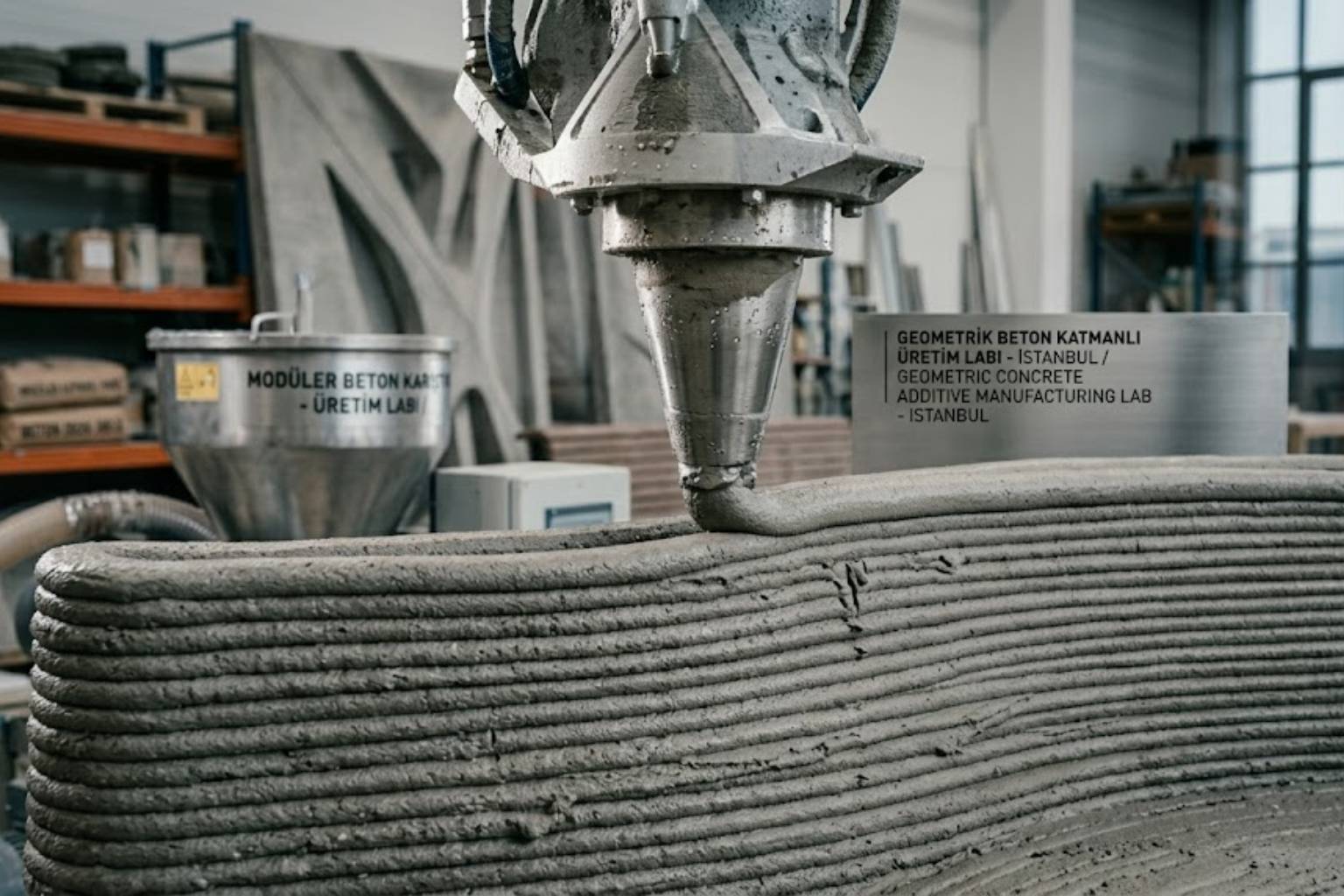
In recent years, 3D concrete printing technology has begun to offer a new method in the production of these modular elements. Thanks to the layer-by-layer production of concrete or special mortars, concrete components can be manufactured without using molds.
This approach provides significant advantages especially in project-specific productions such as urban furniture, landscape elements, and architectural concrete parts.
What is a Modular Concrete Element?
Modular concrete elements are based on the principle of producing different parts of a structure or design separately and then assembling them. Thanks to this approach:
- Production can be carried out in a more controlled manner.
- Transportation and installation become easier.
- Different design alternatives can be applied.
Modular production is widely used, particularly in urban design projects and architectural applications.
Modular Element Production with 3D Concrete Printers
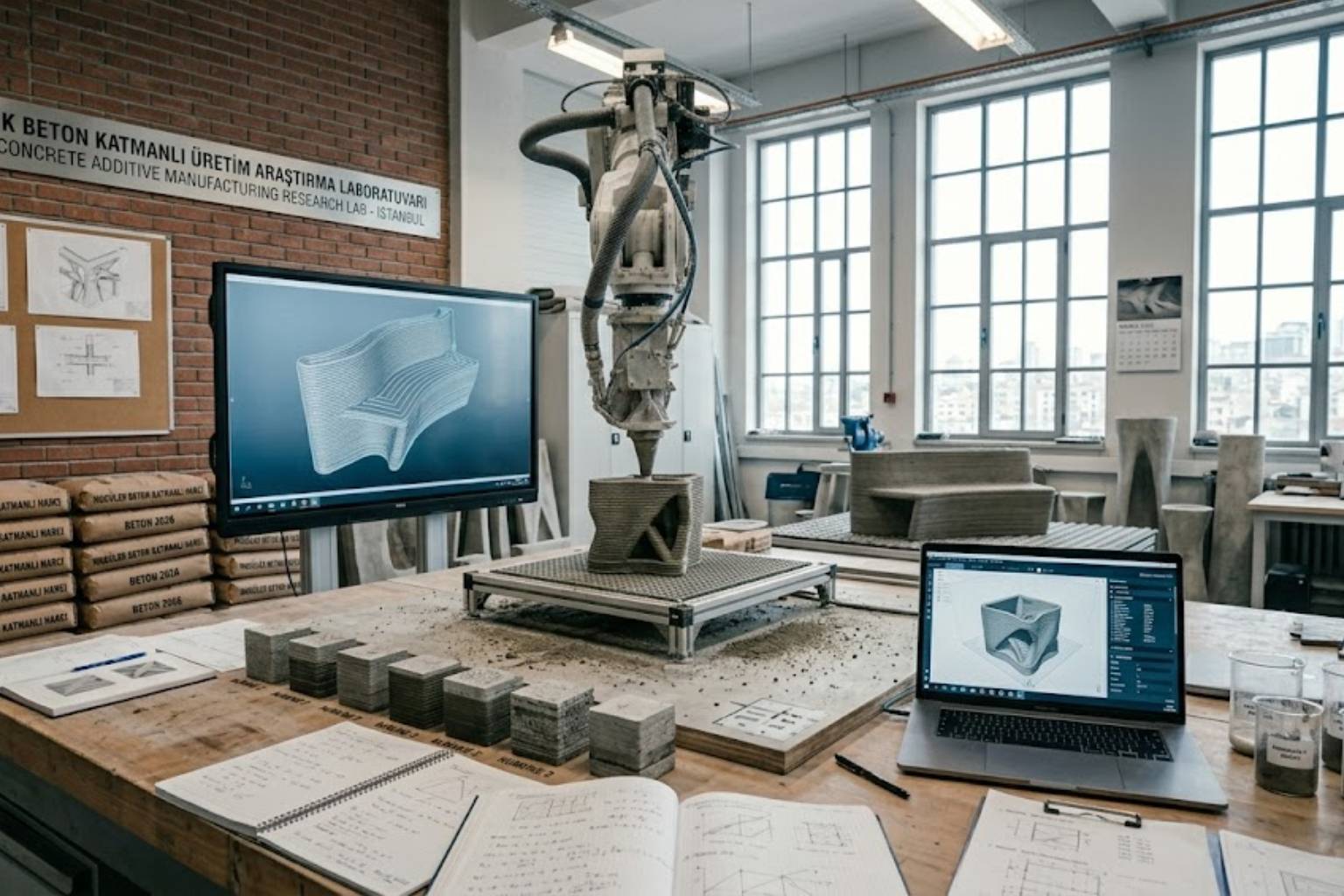
3D concrete printing technology makes it possible to produce modular concrete elements without the use of molds. The production process generally consists of the following steps:
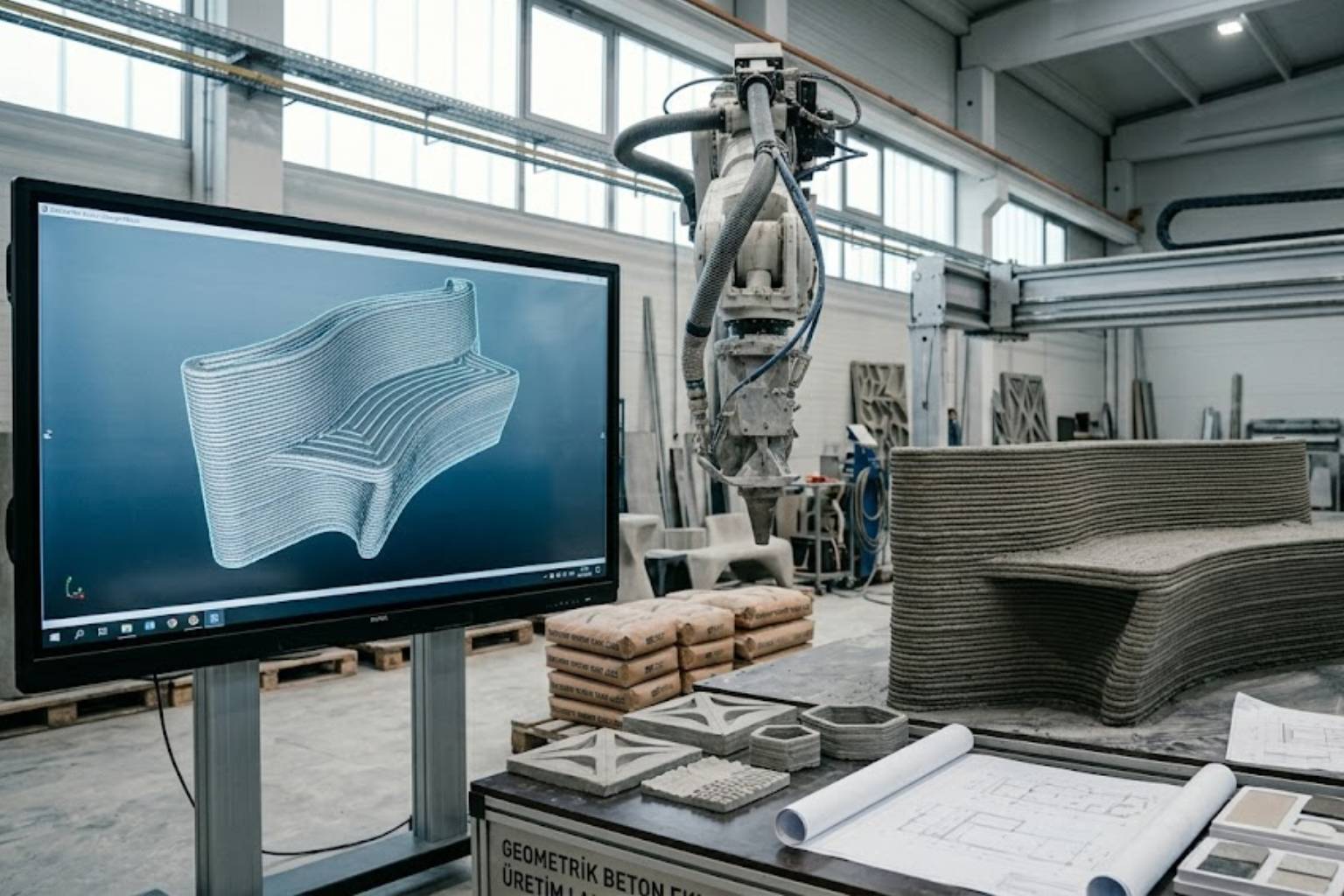
- Designing the concrete element to be produced in a digital environment.
- Converting the design into production data using slicing software.
- Preparing the concrete or special mortar mixture suitable for printing.
- Producing the concrete element layer by layer with the printer.
With this method, the design is directly transferred to production, and the mold preparation process is eliminated.
Modular Concrete Elements That Can Be Produced with 3D Concrete Printers
Many different modular concrete elements can be produced with 3D concrete printer systems. The most common applications include:
- Modular wall elements
- Concrete benches and seating elements
- Concrete planters
- Decorative landscape elements
- Architectural concrete objects
- Facade panels
These products are used especially in park arrangements, public space projects, and architectural applications.
Advantages of 3D Concrete Printing
Mold-free production: 3D concrete printer systems allow for production without molds. This creates a significant advantage, especially for custom-designed concrete elements.
Design freedom: In traditional concrete production, design is limited by molds. Thanks to 3D concrete printing technology, more unique and diverse geometries can be produced.
Rapid prototyping: Architectural designs and new product ideas can be produced as prototypes in a short time.
Project-specific production: Concrete elements in different sizes and designs can be produced for each project. This provides flexibility, especially in architectural and landscape projects.
Confabric 3D Concrete Printing Systems
Confabric is a technology company that develops 3D concrete printing systems and high-performance concrete mortar solutions compatible with these systems.
The systems we develop;
- 3D concrete printers
- Mixer and pump systems
- Concem dry mortar solutions specific to 3D printing
offer an integrated production infrastructure working together seamlessly.
You can contact us to get more information about 3D concrete printing technologies.
Email: info@confabric.com
Phone: +90 544 872 48 58
Branch: Teknopark Istanbul - Sanayi Mahallesi Teknopark Bulvari No:1/4C Inner Door No: Z08 Pendik-Istanbul
Production Facility: Hatip Mahallesi 1704. Sokak J Blok No:3L Corlu / Tekirdag