How Are Smart Cities Being Built Using 3D Concrete Printing?
In recent years, the construction sector has undergone a major transformation with the development of digital production technologies. One of the most striking examples of this transformation is 3D concrete printing technology.
Unlike traditional construction methods, this technology enables the shaping of concrete or specially developed mortars using layer-by-layer production based on digital design data.
3D concrete printing technology not only accelerates production processes but also offers more efficient, plannable, and flexible production models in smart city projects.
In this article, we will examine how 3D concrete printing technology contributes to the development of smart cities and why it is increasingly preferred in the construction sector.
What is 3D Concrete Printing Technology?
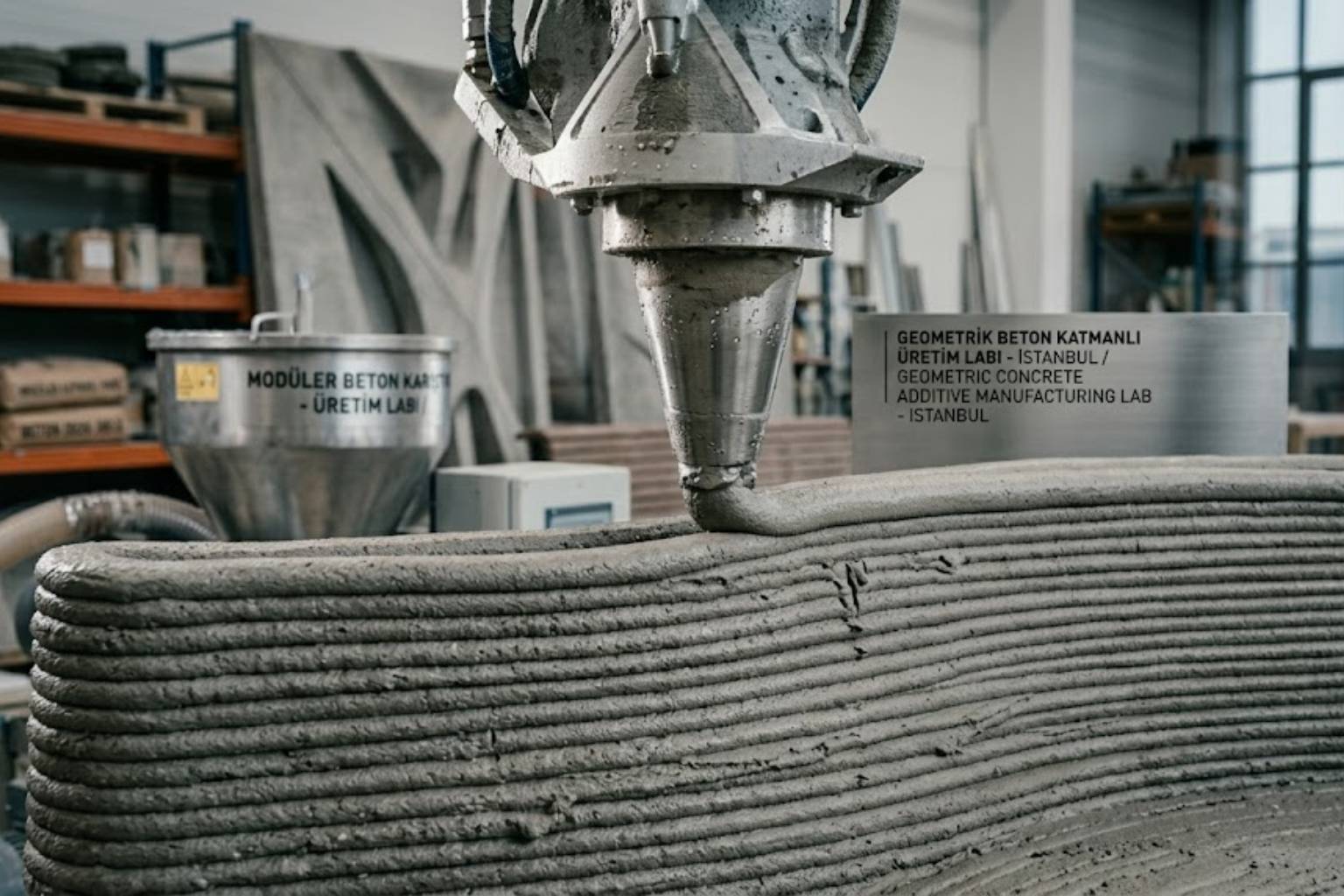
3D concrete printing is based on the principle of producing concrete or specially developed mortars layer by layer using computer-controlled printer systems.
With this production method:
- Mold requirements are eliminated
- Material usage is optimized
- Production time is shortened
- Complex geometries can be produced easily
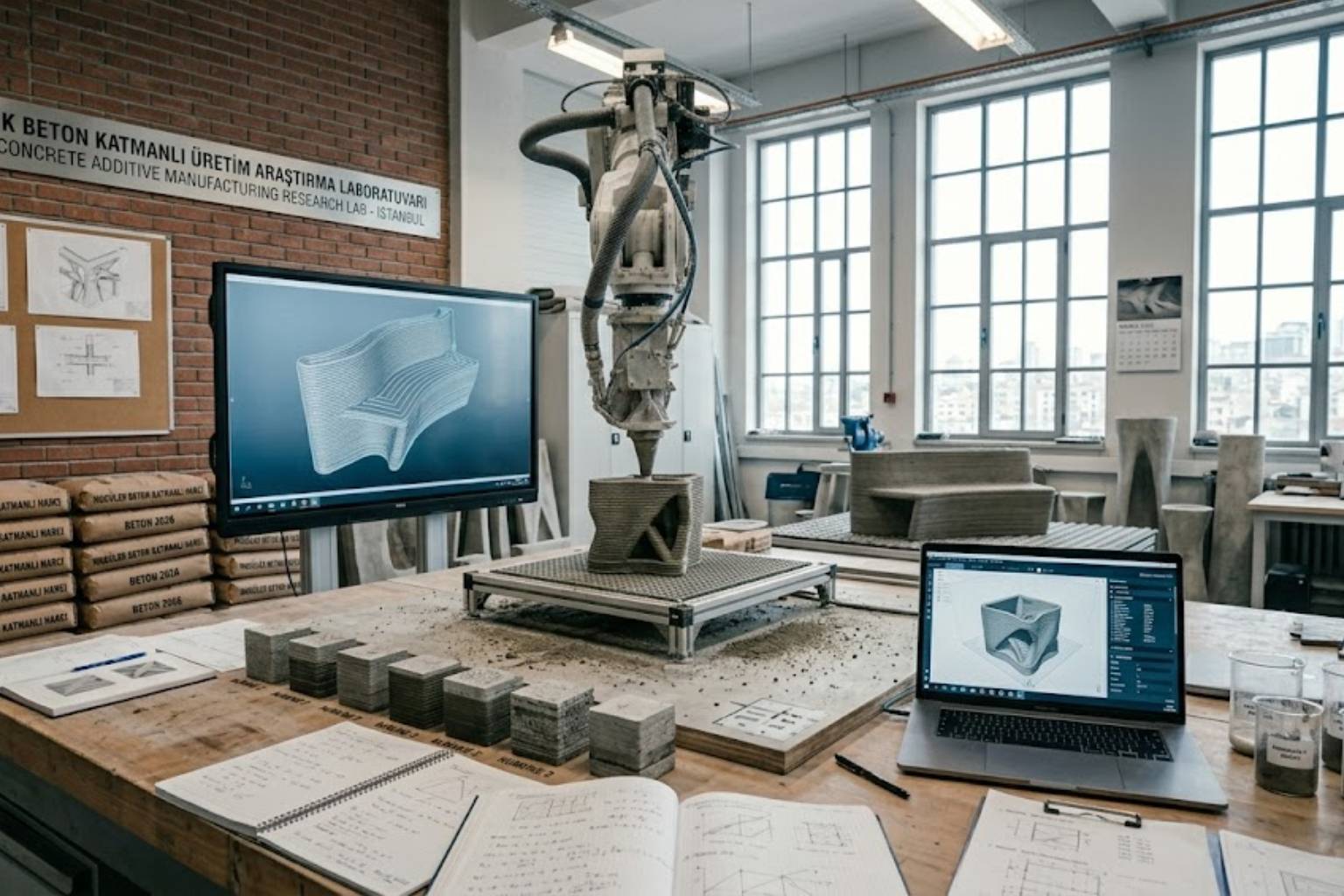
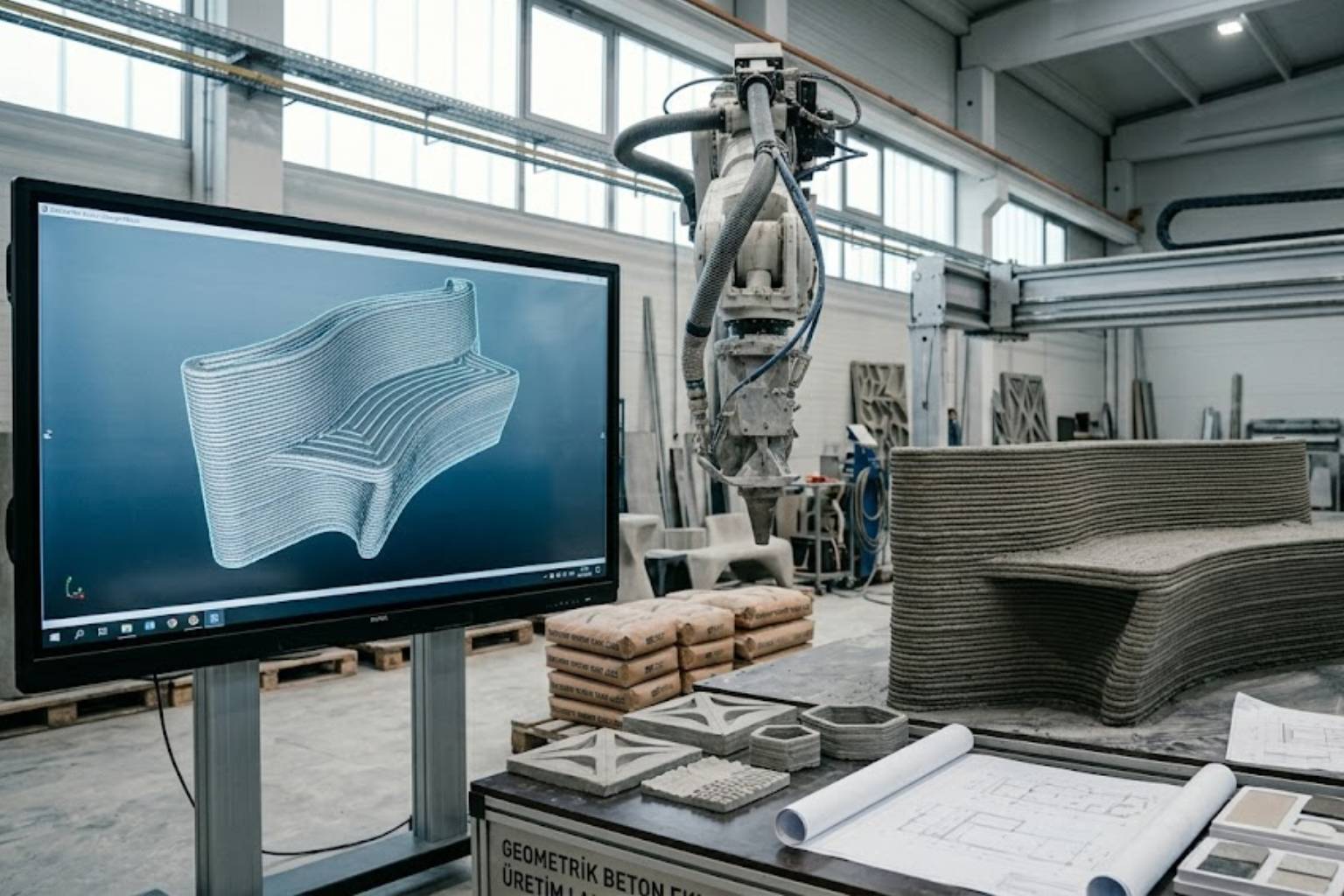
Designs prepared with digital modeling software are directly transferred to production and transformed into a physical structure using additive manufacturing.
This technology is currently used in many different areas, such as:
- Urban furniture
- Architectural elements
- Modular structures
- Infrastructure components
- Research and prototyping studies
The Role of 3D Concrete Printing in Smart Cities
Smart cities aim to create more efficient and plannable urban systems by integrating technology into city infrastructure. Digital solutions are used in areas such as energy management, transportation systems, data analysis, and infrastructure planning.
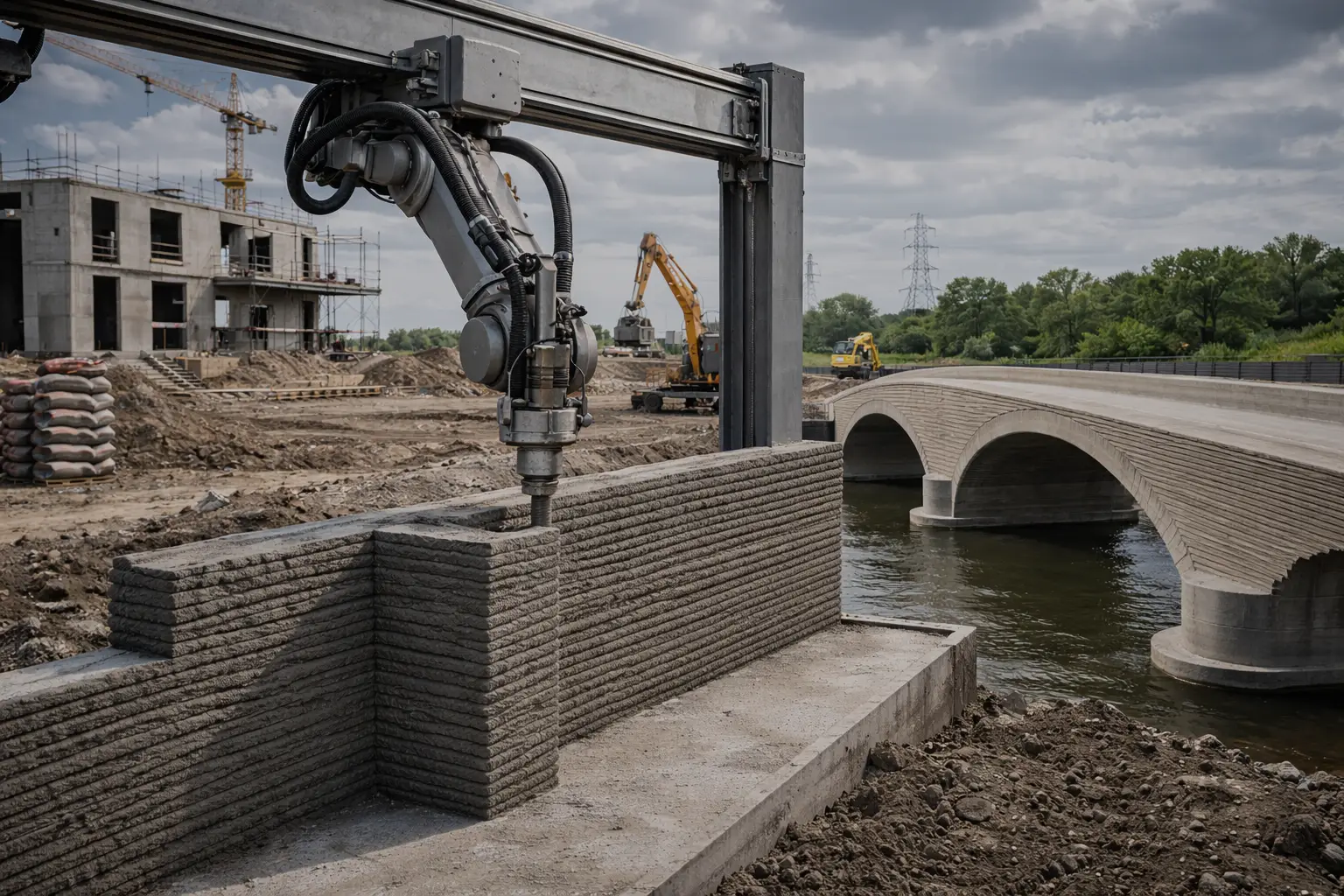
3D concrete printing technology has become one of the key technologies supporting the construction and production side of this transformation.
1. Faster Construction Processes
3D concrete printer systems enable much faster production compared to traditional methods. Structural elements can be produced directly from the digital model thanks to layer-by-layer manufacturing.
This provides:
- Elimination of mold preparation time
- Easier production planning
- Shorter project delivery times
This speed advantage makes a significant difference, especially in large-scale city projects.
2. More Efficient and Controlled Concrete Production
In smart city projects, it is crucial that structural production is fast, controlled, and plannable. 3D concrete printing technology enables digital management of the production process. In this way, concrete is used only in the required amount, and the production process becomes more controlled.
- Material usage is optimized
- Production processes are standardized
- Error rate decreases
- Repeatable production quality is achieved
It also allows testing of different concrete recipes and material combinations. This contributes to the development of next-generation concrete production methods.
3. Cost Advantage
In traditional construction methods, the biggest cost items are usually mold production, labor, and long production times. 3D concrete printing technology can significantly reduce these costs by digitizing production.
It offers serious cost advantages, especially for low-volume custom productions, complex designs, and prototype manufacturing.
4. Design Flexibility
In traditional concrete production, design is often limited by mold constraints. 3D concrete printing technology removes these limitations.
Parametric designs, organic geometries, and custom surface textures can be produced directly. This makes it easier to create unique architectural designs, aesthetic urban furniture, and project-specific structural elements in cities.
3D Concrete Printing and Cities of the Future
In the coming years, as cities grow and infrastructure needs increase, the application area of 3D concrete printing technology will expand even further.
Thanks to this technology, fast production, controlled material usage, design flexibility, and cost advantages will come together to contribute to more efficient construction of cities.
While the role of digital production technologies in the development of smart cities continues to grow, 3D concrete printing is becoming one of the important tools of this transformation.
Confabric 3D Concrete Printer Technologies
Confabric is a technology company that develops 3D concrete printer systems and high-performance concrete mortar solutions compatible with these systems.
Our developed systems provide an integrated production infrastructure that works together with:
- 3D concrete printers
- Mixer and pump systems
- Concem dry mortar solutions specially developed for 3D printing
For more information about 3D concrete printing technologies, please contact us.
info@confabric.com
+90 544 872 48 58
Branch: Teknopark İstanbul - Sanayi Mahallesi Teknopark Bulvarı No:1/4C İç Kapı No: Z08 Pendik-İstanbul
Production Facility: HATİP MAHALLESİ 1704.SK. J BLOK NO:3LI ÇORLU / TEKİRDAĞ