The Role of 3D Concrete Printing in Architecture and Design
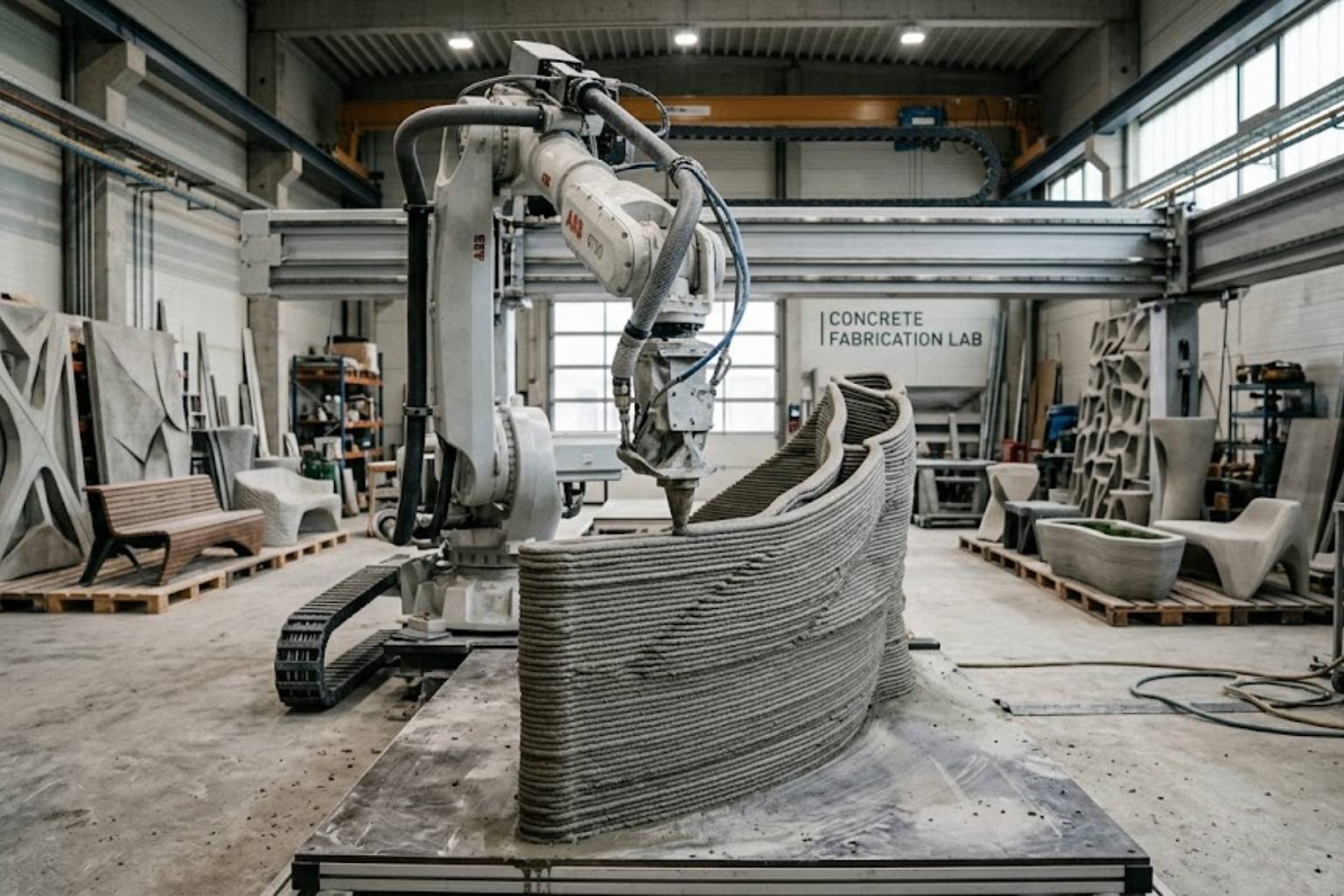
The development of digital production technologies has enabled the emergence of new production methods in the fields of architecture and design. One of the most striking examples of this transformation is 3D concrete printing technology.
Thanks to 3D concrete printer systems, concrete or special mortars can be produced directly from a digital model. The ability to manufacture without being tied to traditional mold methods significantly changes architectural design processes.
Today, 3D concrete printing technology is used in many different applications, from architectural elements to urban furniture, facade panels to specially designed concrete objects.
In this article, we will examine the advantages that 3D concrete printing technology offers to the world of architecture and design.
What is 3D Concrete Printing?
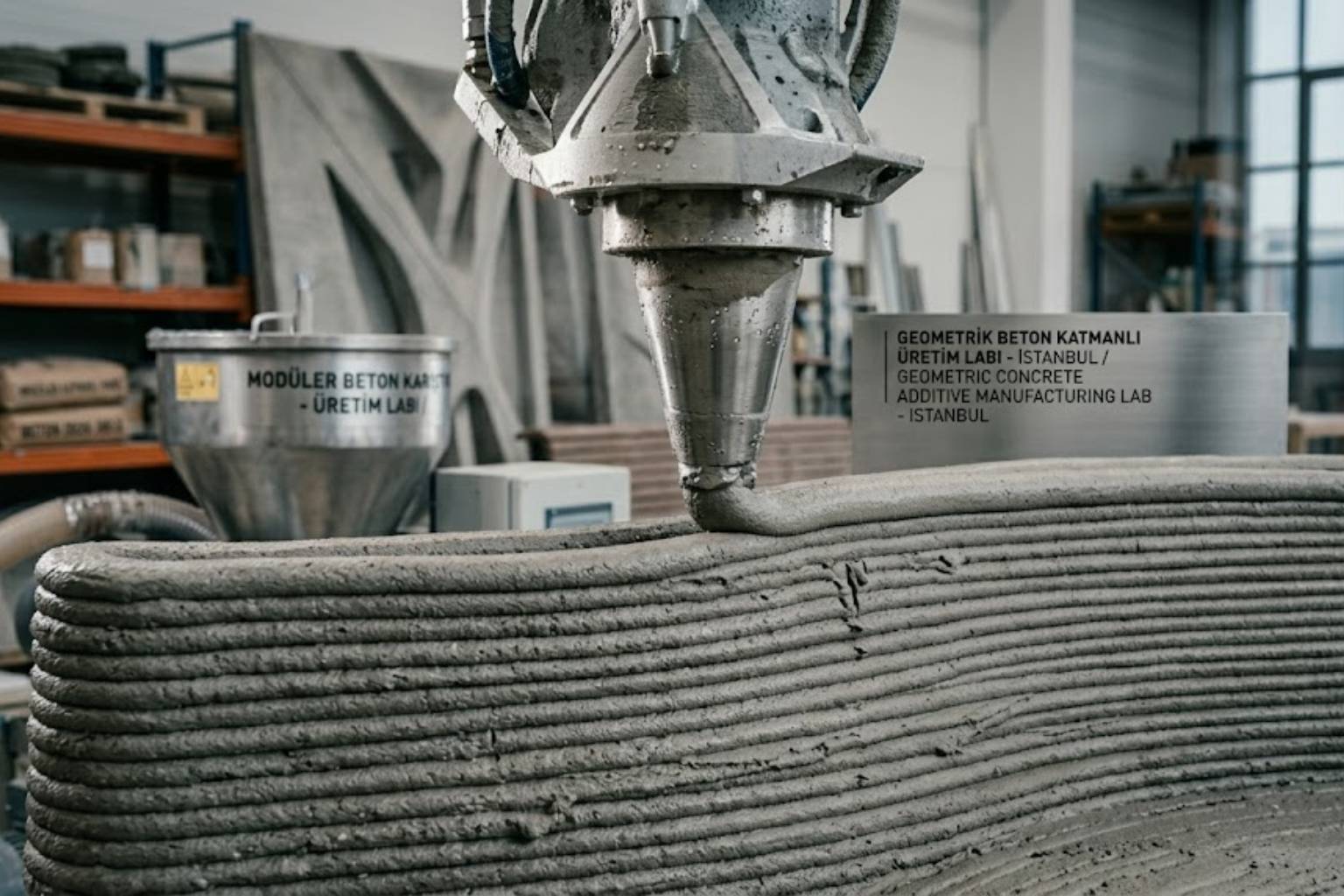
3D concrete printing is based on the principle of producing concrete or specially developed mortars layer by layer using computer-controlled printer systems.
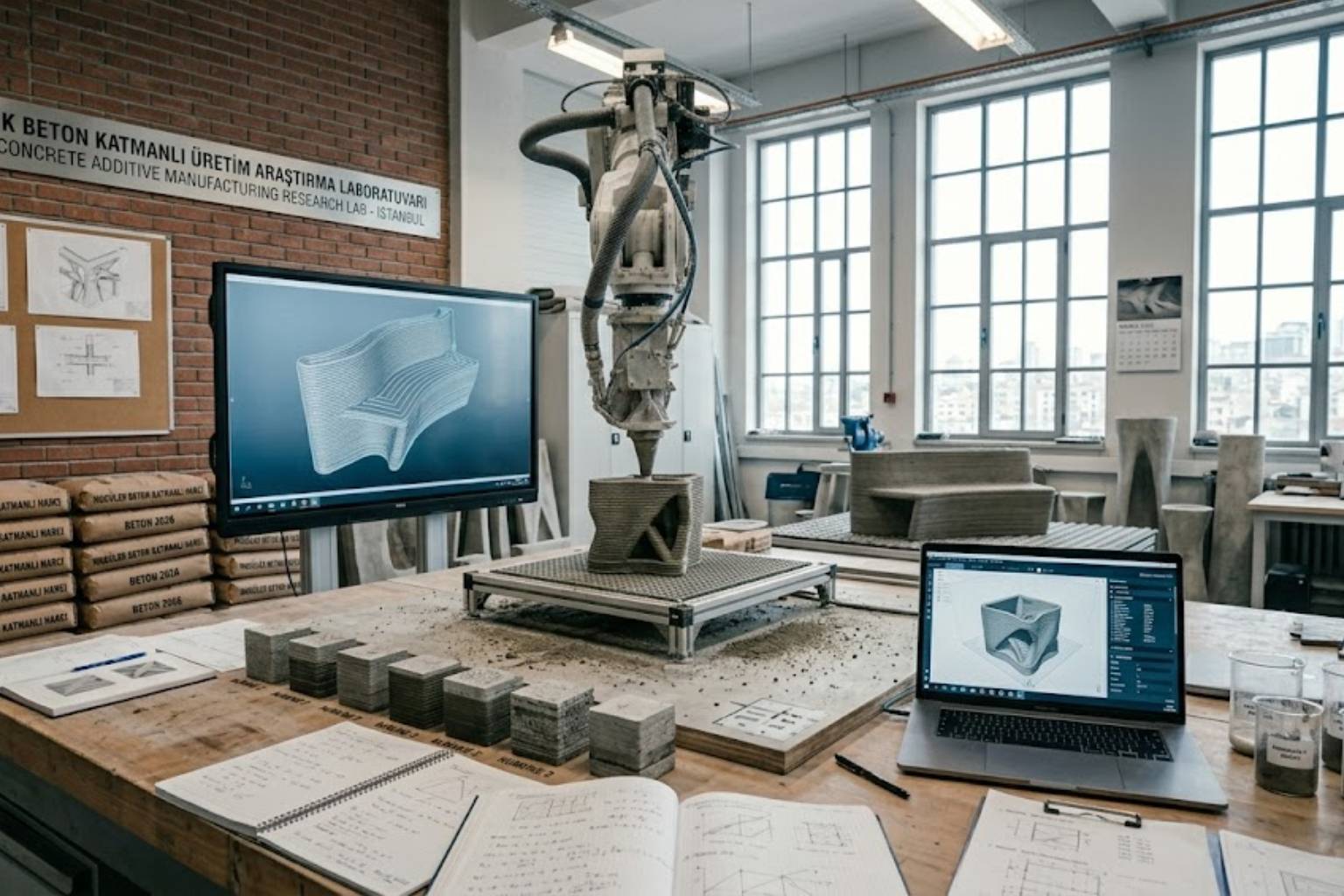
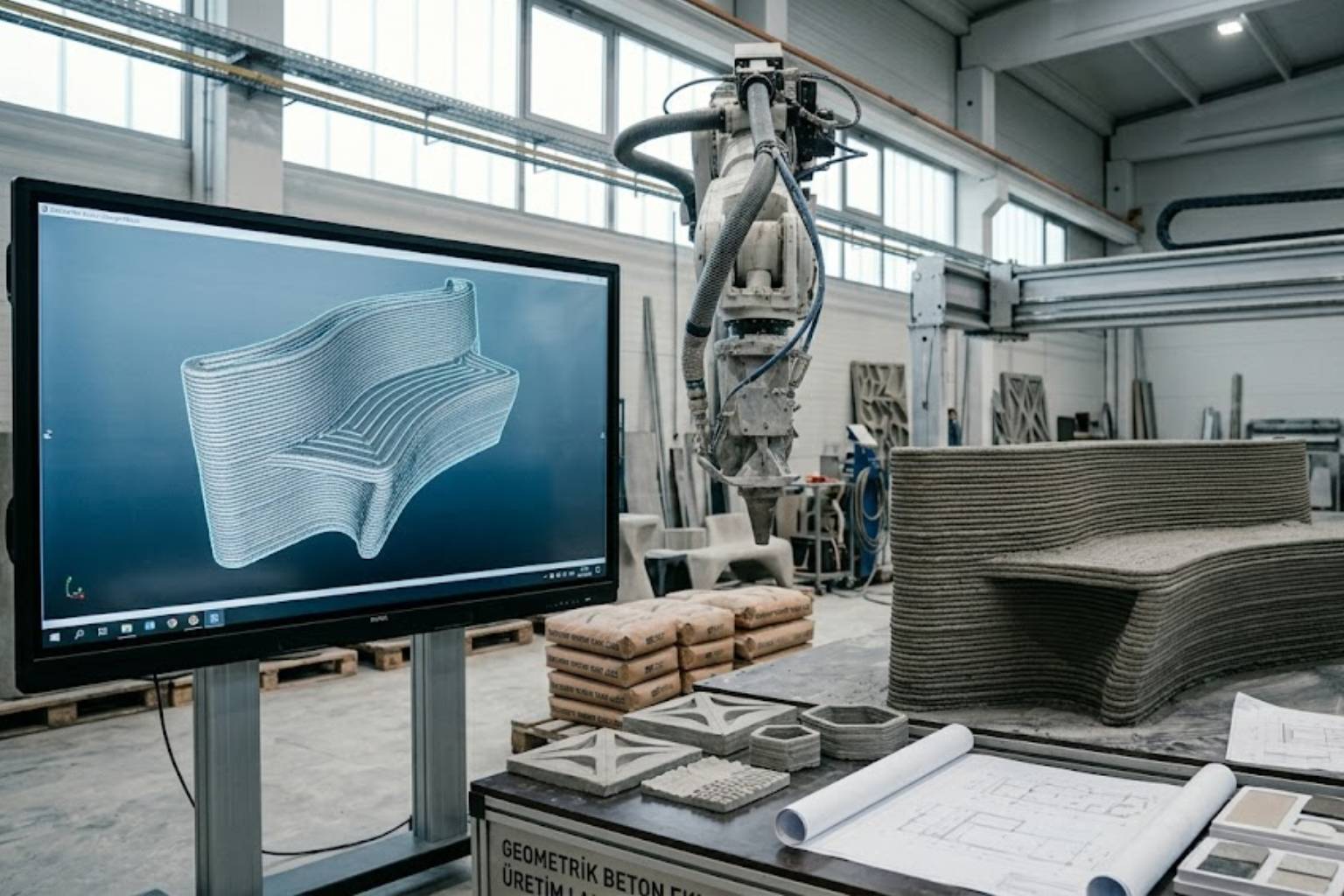
Thanks to this production method, digital design data is transferred directly to the production process. Thus, architectural elements can be produced without the use of molds.
The 3D concrete printing process generally consists of the following steps:
- Preparation of the digital model
- Slicing the model and converting it into production data
- Preparation of concrete or mortar mix suitable for printing
- Printing the material layer by layer
This method makes it possible to produce architectural designs quickly and with high precision.
Advantages of 3D Concrete Printing in Architecture and Design
1. Design Freedom
One of the greatest advantages of 3D concrete printing technology in the field of architecture is design freedom.
In traditional concrete production, design is often limited by molds. However, thanks to 3D concrete printer systems:
- organic geometries
- parametric designs
- curved surfaces
- unique architectural forms
can be produced easily. This offers architects new possibilities not only in terms of aesthetics but also in terms of functionality.
2. Faster Production Process
3D concrete printing technology can significantly reduce the production time of architectural elements.
In traditional methods, processes such as mold preparation, assembly, and mold removal require considerable time. 3D concrete printing technology eliminates most of these stages thanks to its direct production approach.
Thus:
- architectural prototypes can be produced quickly
- design changes can be implemented in a short time
- project processes can be managed more efficiently
3. Optimization of Material Usage
3D concrete printing technology enables the digital planning of the production process. In this way, concrete is used only in the required amount.
Thanks to the layer-by-layer production approach:
- unnecessary material usage is reduced
- the production process becomes more controlled
- a direct relationship can be established between design and production
This provides a significant advantage, especially in architectural prototype production and custom design projects.
4. Architectural Prototyping and Custom Production
3D concrete printer systems accelerate prototyping processes in architecture projects.
Architects and designers can quickly turn their digital models into physical products. This allows different alternatives to be tested rapidly during the design process.
3D concrete printing technology is used especially in the following areas:
- facade panels
- decorative concrete elements
- urban furniture
- landscape design products
- architectural prototypes
The Future of Digital Production in Architecture
Digital production technologies are reshaping architecture and design processes. 3D concrete printing technology is an important part of this transformation.
Thanks to newly developed printer systems, architectural designs are no longer limited to the computer environment but can be transferred directly to the production process.
This approach reduces the distance between design and production in architecture, creating a faster and more flexible production model.
Confabric 3D Concrete Printing Systems
Confabric is a technology company that develops 3D concrete printer systems and high-performance concrete mortar solutions compatible with these systems.
Our developed systems provide an integrated production infrastructure that works together with:
- 3D concrete printers
- mixer and pump systems
- Concem dry mortar solutions specially developed for 3D printing
For more information about 3D concrete printing technologies, please contact us.
info@confabric.com
+90 544 872 48 58
Branch: Teknopark İstanbul - Sanayi Mahallesi Teknopark Bulvarı No:1/4C İç Kapı No: Z08 Pendik-İstanbul
Production Facility: Hatip Mahallesi 1704. Sokak J Blok No:3L Çorlu / Tekirdağ